Within this post, I am going to reflect on visits to one of my favourite community museums – the Peel Art Gallery, Museum and Archives (PAMA).
PAMA is interesting from a community museum policy perspective because they are relatively well resourced due to local support, demonstrating the significance of regional governments to heritage. The Museum employs full time, year round staff at levels that are rare for community museums in what we now call Canada. Their staff is doing a lot of interesting work in museum design, community building and decolonization.
Background
PAMA and Local Support
The Peel Art Gallery, Museum and Archives (PAMA) has an excellent video on their history:
Click here if you would like a summary of the video above.
The Peel Art Gallery, Museum and Archives has roots in the 1930s with the collection of author William Perkins Bull and (later) the Peel County Historical Society. In the 1960s, some of the women’s institutes started a museum in a small cottage that opened seasonally. One of these institutes began advocating for a permanent museum in collaboration with the Peel County Historical Society. They opened in the Peel County Land Registry Office as the Peel Museum and Art Gallery in 1968. In 1977, the nearby jail was renovated and became part of the Peel Heritage Complex, which also housed an archive. In 2010-2012, they closed for an extensive expansion project and reopened in 2013 as PAMA with four interconnected heritage buildings.
When the Regional Municipality of Peel was created in 1974, they took over ownership of the museum and art gallery collections. They took over management a decade later in 1984 (Moreau 2018). I could not find an explanation for why ownership and then management transferred to the regional municipality. However, there are two likely explanations.
First, I may have misunderstood and the collections were previously owned by Peel County rather than the historical society or women’s institutes then transferred to the regional municipality when the county dissolved. However, the transfer of community museums from non profit to municipal ownership (then later, management) was relatively common in Ontario at the time due. So, provincial community policy is another possible explanation.
In the early 1970s, the provincial operating grant for community museums was still restricted and inaccessible to museums owned by a non profit. Some non profits transferred ownership to the municipality in order to get funding but continued to manage the space. In the 1980s (after non profits became eligible for the funding), the provincial museum advisors were implementing standards for community museums attached to the grant. They often encouraged more municipal involvement, which could lead to more paid staff positions sustained support from municipalities. Municipally owned museums were better positioned to leverage provincial support and the new standards to increase their local support.
Although PAMA receives funding from all levels of government, the local level is the most significant. Their 2026 budget presentation lists $46,250 in grants from the federal and provincial governments (PAMA 2026a). In comparison, Peel Region contributes almost $6 million to the Museum’s budget. Notably, the region includes the municipalities of Mississauga, Brampton, and Caledon. The regional tax levy is approximately, $3.5 million from Mississauga, $2.1 million from Brampton, and $0.4 million from Caledon (Valeri 2026).
In 2023, the Provincial government announced their intention to dissolve Peel Region, but quickly reversed this decision (Peel Region 2026). Discussions about the creation of a more cost efficient regional government continued (PAMA 2023). After an Intermunicipal Working examined the implications of transferring the Museum’s to the lower level municipalities (Valeri 2025), the Regional Council approved PAMA’s transfer to the City of Brampton (where the Museum is located), excluding the archives (Valeri 2026). The City of Brampton has positioned the transfer as part of ongoing revitalization efforts and positive because they gain an asset (the building and collection) valued at more than $60 million (City of Brampton 2026).
Since the City of Brampton will now be responsible for the entirety of the local contribution to the Museum’s budget, I plan to keep paying attention to the funding situation. PAMA accomplishes all the amazing things that I discuss below in the reflection because of their resources (mainly, I think, funding for staff positions). I am looking forward to seeing what the transfer means for the Museum’s future!
Side note: Some of the documents say the transfer will be effective January 2027. However, the most recent documents and resolutions that I accessed note January 2028.
Visiting PAMA
PAMA was one of the first museums that my little one visited as an infant and we’ve enjoyed the experience enough to keep going back.
In 2026, we visited twice and focused on the museum side of the space. Both times, we saw the following exhibits:
- PAMA Collects: Connections Between Us
- Stories of Home: Finding Community and Belonging in Peel
- Yours to Discover: Sights/Sites of Peel Region
- Behind the Bars: The History of the Peel County Jail
During my January visit, I also saw:
- Land, Sea, Sky: Inuit Art from PAMA’s Collection (Finished March 29, 2026)
- Remember, Resist, Redraw: A Radical History Poster Project (Project information available here)
- All Aboard! The Railways of Peel (I found an end date of October 2025, but did visit the exhibit after that date)
During my recent visit, I saw:
- Spotlight: Selections from the Museum Collection
- This is How we do it: Creating Museum Exhibitions
- Visual Voices: Exploring Identity
- Witness Blanket
For both visits, I had a toddler with me and did not get to spend as much time in the space as I would have liked. As such, I focused on the objects and interactives then took pictures / videos so I could read at home. While not an ideal way to visit a museum, I am not an ideal visitor and it works well for me.
Reflection
The reflection will start with some general impressions then a review of the four exhibits that we spent the most time exploring – Stories of Home: Finding Community and Belonging in Peel, PAMA Collects: Connections Between Us, Spotlight: Selections from the Museum Collection, and This is How we do it: Creating Museum Exhibitions.
The Peel Art Gallery, Museum, and Archives clearly designs their exhibitions with children and accessibility in mind. Most of the exhibit spaces have interactives that are designed to appeal to children and adults. For example:
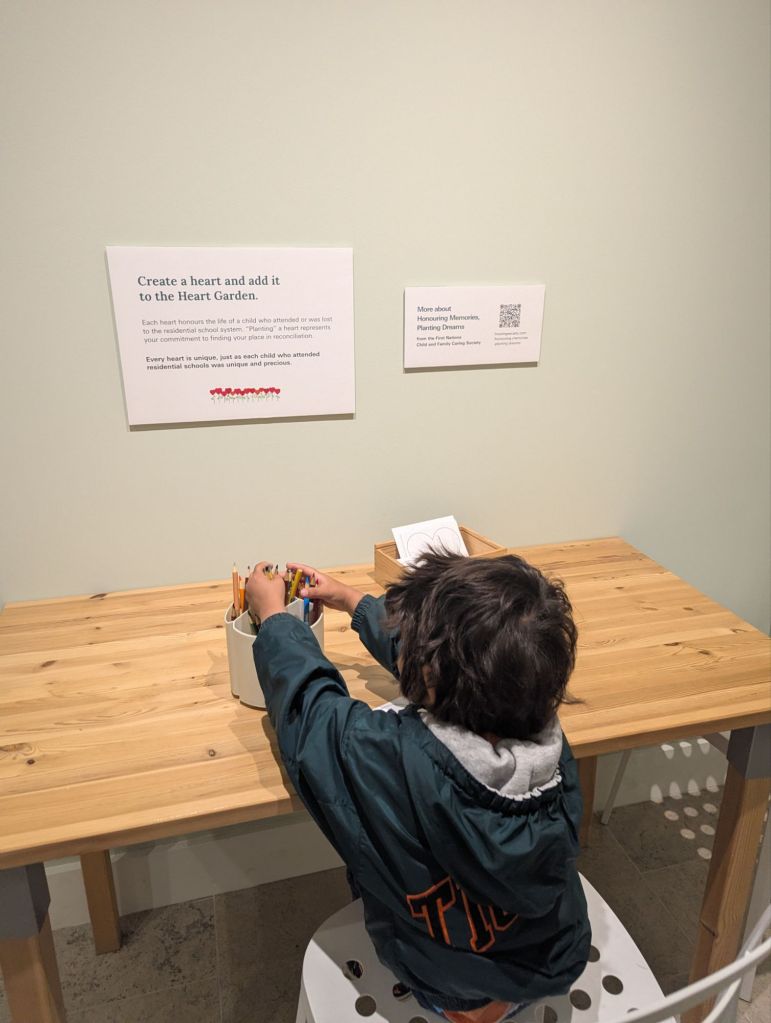
Liminal space design: There is a small room between two galleries. On one side, there is a core exhibit (Yours to Discover) that displays art from their collection, reflecting a sense of place. On the other side, there are temporary art exhibits. The room connecting the spaces has a desk with a colouring activity that changes based on the temporary exhibit. The room also contains seating and books on the theme.
During my first visit, I looked at the pictures others had done and considered the connections between the two exhibits using the prompts in the room. During my second visit, my toddler was behaving well and engrossed in the colouring. This enabled me to read the panels in the Witness Blanket exhibit (that were within the sight line of the liminal space). I could have also coloured with my little or taken time to look through the books and think about reconciliation.
Temporary exhibit design: All Aboard! The Railways of Peel (January visit) and Spotlight: Selections from the Museum Collection (June visit) were in the same gallery space. They have an interactive table in the gallery at toddler height. For the All Aboard! exhibit, the table had wooden train tracks with posters on the wall behind it. For the Spotlight exhibit, the table had puzzles and there was also a magnetic puzzle at a higher height on the wall behind it. While neither entertained my little for long enough that I could truly engage with the exhibit, they bought me some time.
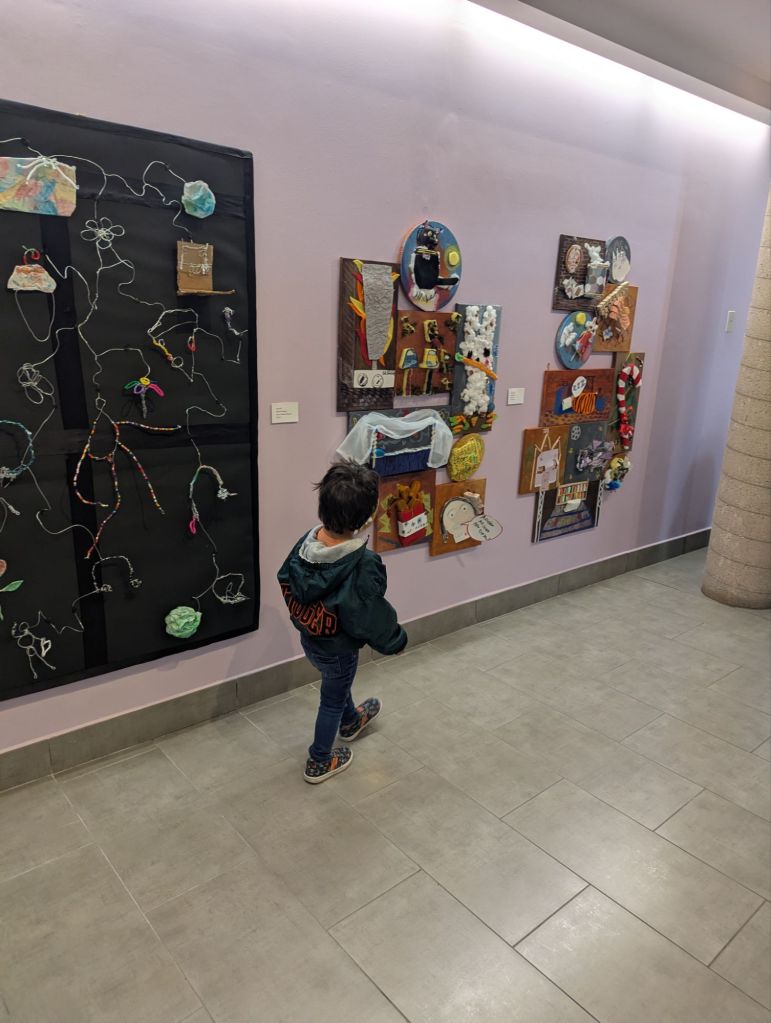
Interactives are not the only way children are included in the space. The exhibit Visual Voices: Exploring Identity is an exhibit of art responding to the theme of identity by elementary students. The work is really impressive, but I was most impressed by the way the exhibit was designed differently. They installed the art at a lower height than typically seen (e.g., the height of installation in their Yours to Discover exhibit). My little loved it. They had a huge grin on their face as they walked around and pointed at the art they liked.


Another thing that I appreciate about PAMA, is the evidence throughout the space that decolonization work is ongoing. Most notably, Indigenous Peoples are not relegated to a single exhibit or space in the narrative. For example, Remember Resist Redraw is not an exhibit about Indigenous histories but includes Indigenous histories as part of the radical history poster project. There are also versions of land acknowledgements visible in multiple places, including at the start of different exhibits as I will mention in the reflection below.
Stories of Home: Finding Community and Belonging in Peel
Core exhibit
Stories of Home: Finding Community and Belonging in Peel looks at what home means to the people living, working in and visiting Peel. Throughout history finding a home in Peel has been exciting, overwhelming and at times, difficult. This exhibit explores the ideas around establishing connection to place, and people in creating a sense of belonging that strengthens community. Through personal stories, video, images and objects, this exhibit will showcase connections between the Peel of the past, today and the future (PAMA 2026b).


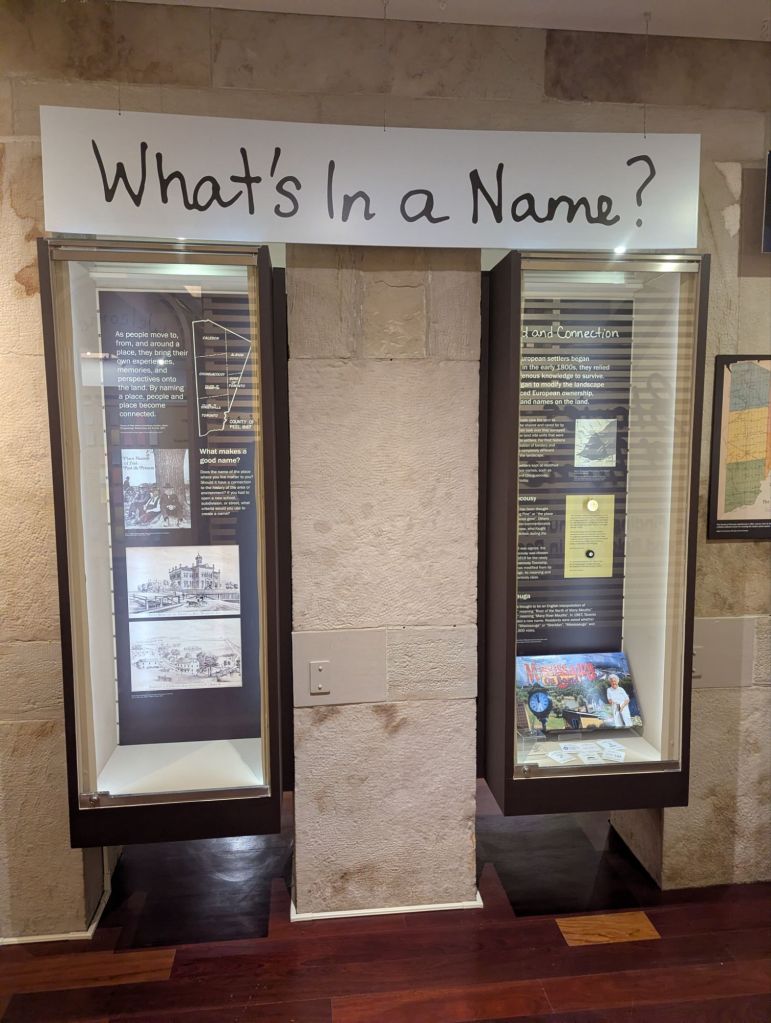



While there are multiple possible routes through the space, our visit started in a small gallery that provides the historical context for Peel today, discussing how places are named. The first panel I encountered states, “Indigenous people have always lived here.” The panel goes on to provide treaty information and a QR code to learn more.
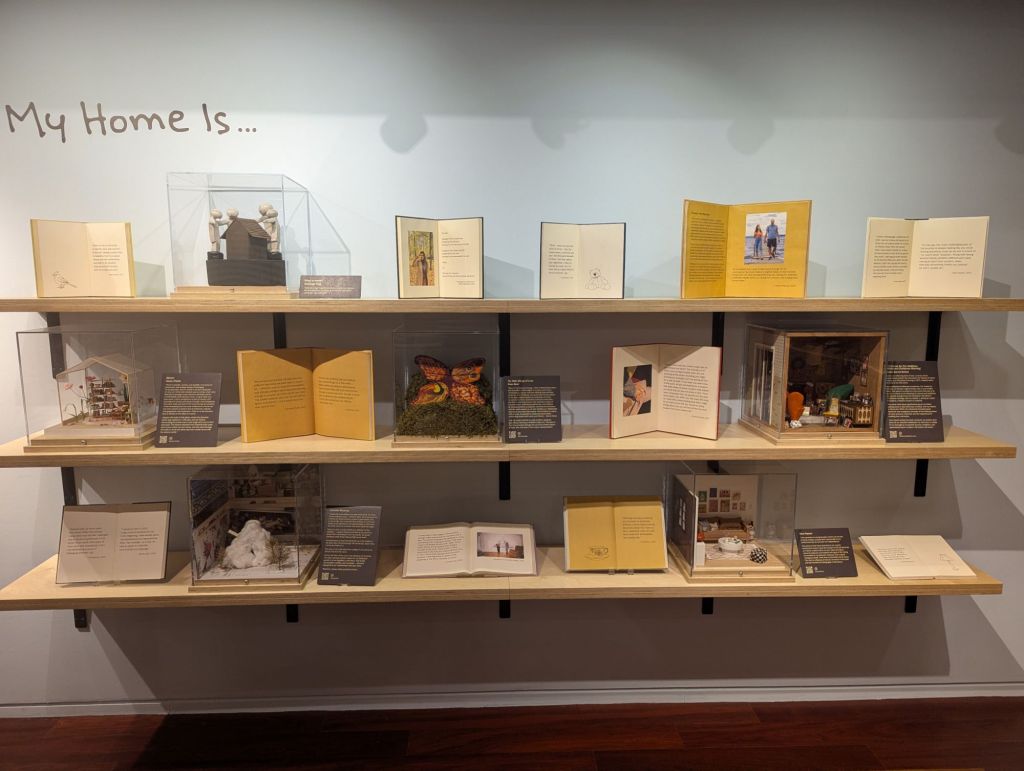
As I entered the main exhibit gallery, the first thing that I saw was the prompt “My story of home is…” surrounded by words (e.g., Refugee, Indigenous, Freedom Seeker, Newcomer, etc.) and hooks with different coloured paper where people have written about their experiences. The exhibit includes content from both community partners and the Museum, such as artifacts and photos alongside different themes (e.g., arrival). The content is celebratory and invites audiences to think about what makes a space home, but also contains some difficult histories.
Stories of Peel is the only non-meta exhibit that I am expanding on in this reflection because it speaks to identity. I am interested in the ways regional identity is (re)constructed in museum spaces. Here are a few things that stood out to me as significant:
The exhibit emphasizes that there are multiple stories of home without seeming to privilege one group or path.
Exhibitions on regional identity in community museums often attempt to create a cohesive narrative that presents one kind of story of home. A common example in what we now call Ontario is a narrative that states or implies “we’re all immigrants here.” Alternatively, there is an emphasis on founding a municipality or the stories of the largest group of people who came to the place. Stories of Home makes a deliberate effort to present differences, acknowledging that there is not one story of home. This point is emphasized in the artistic interpretations and in a display with individuals’ reflections responding to the prompt – what is a home.
Indigenous Peoples are included within the exhibit in multiple places.
The contextual information discusses Indigenous place names, “Indigenous” is included as a possible label for individuals at the beginning, and there is a panel on Indigenous-Settler relationships. I did not read every didactic or look at every item (due to my toddler), but assume there are likely other inclusions at the individual level. Notably, there is a display of keepsakes as well as written and artistic responses to the question – what is home? This content seems to present the perspectives of a diverse group of people.
A section of the exhibit is designed for children and families.
There is a kitchen space with interactives for kids beside a living room area with couches and reading materials. Within the kitchen space, there are multiple ways for children to engage, including kitchen toys, drawers that open, and colouring sheets. The table in the kitchen provides conversation prompts that would be great starting points for conversation amongst a group of mixed ages coming to the exhibit, such as: What stories can art and photos tell?
There are multiple kinds of entry points to consider the question of home.
Personally, I like considering history and large questions through the lens of artifacts and labels. I also enjoy interactives that provide more detailed information on individual stories. However, clearly other people think differently. I enjoyed seeing additional ways of considering home, such as: artistic considerations, question prompts, a community board with resources, and QR codes.
The exhibit also starts with two interrelated but distinct questions that provide different entry points into the exhibit. One theme is – what is your story of home? The other is – what does home mean? There are questions throughout the space related to these two themes that, I believe, appeal to different people and provide different ways to engage with the content.
They recognize that perspectives and life experiences are missing from their exhibit.
I think it’s important for museums to leave space in exhibits like this for whatever they may have missed. When museums claim to tell an entire story, they imply anything missing from the story isn’t relevant or important.
The panel acknowledging there are untold stories notes there will be a series of changes over the next five years. I am interested to continue to visit and see how the exhibit evolves.
PAMA Collects: Connections Between Us
November 22, 2025 to Fall 2026
What do cornstarch and ice skates have in common? Every object tells a story. Through the items we collect, we get to learn about ourselves and others. Visit the PAMA Museum to explore the objects that reflect the shared histories and communities of Peel region (PAMA 2026c).
Unfortunately, I was not able to fully experience the exhibition on either visit. It is in what I consider a liminal (inbetween) space that resembles a hallway sandwiched between two exhibition galleries. The long narrow shape of the space influences the design and there is nothing in the space that grabbed my child’s attention. In cases like this, I take lots of pictures. To be fair, I always take lots of pictures. However, sometimes, the pictures are how I get to read the panels and more fully appreciate the content of an exhibit. I am glad that I took these pictures because the exhibit is incredibly interesting from a museum development perspective.
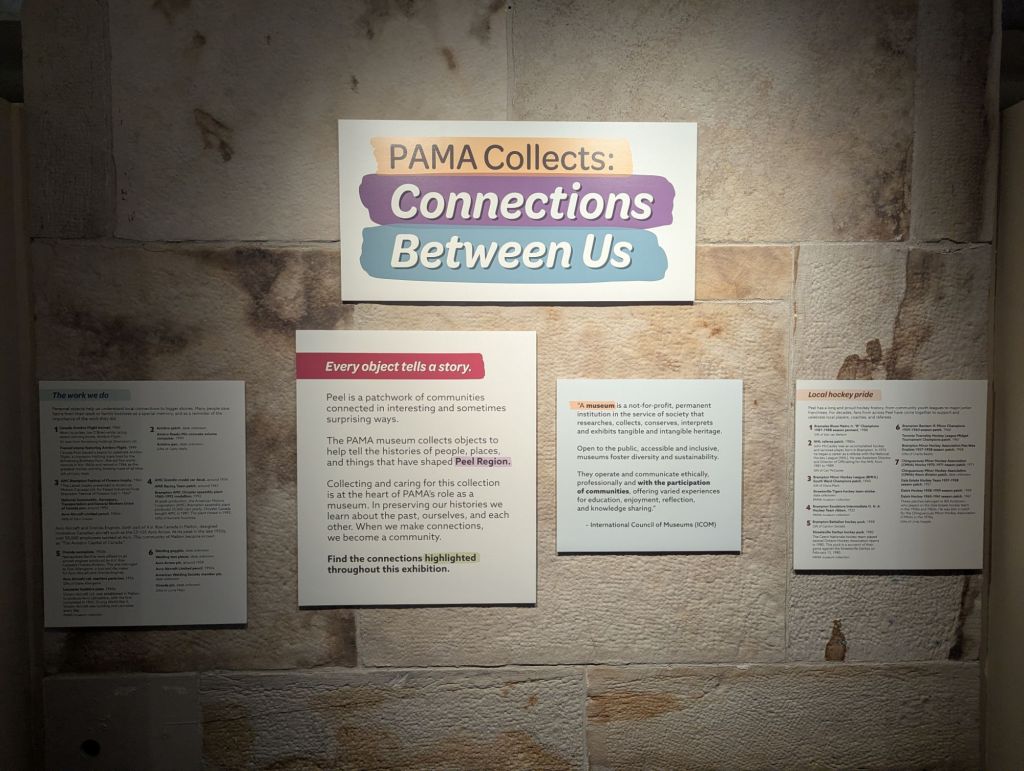
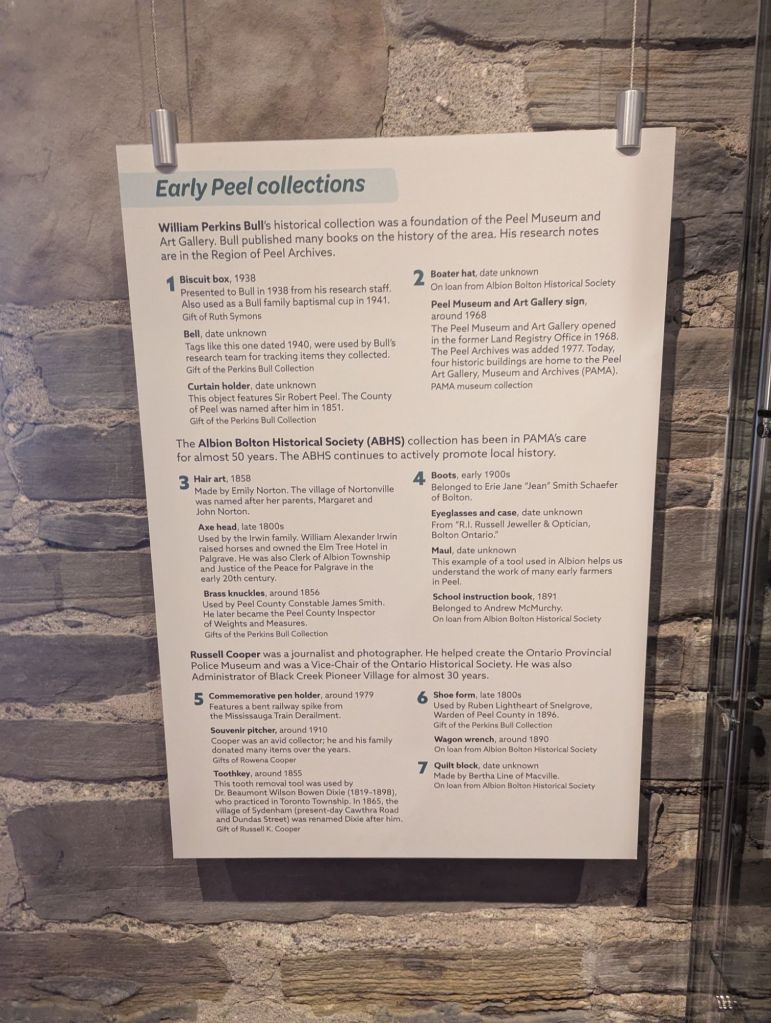
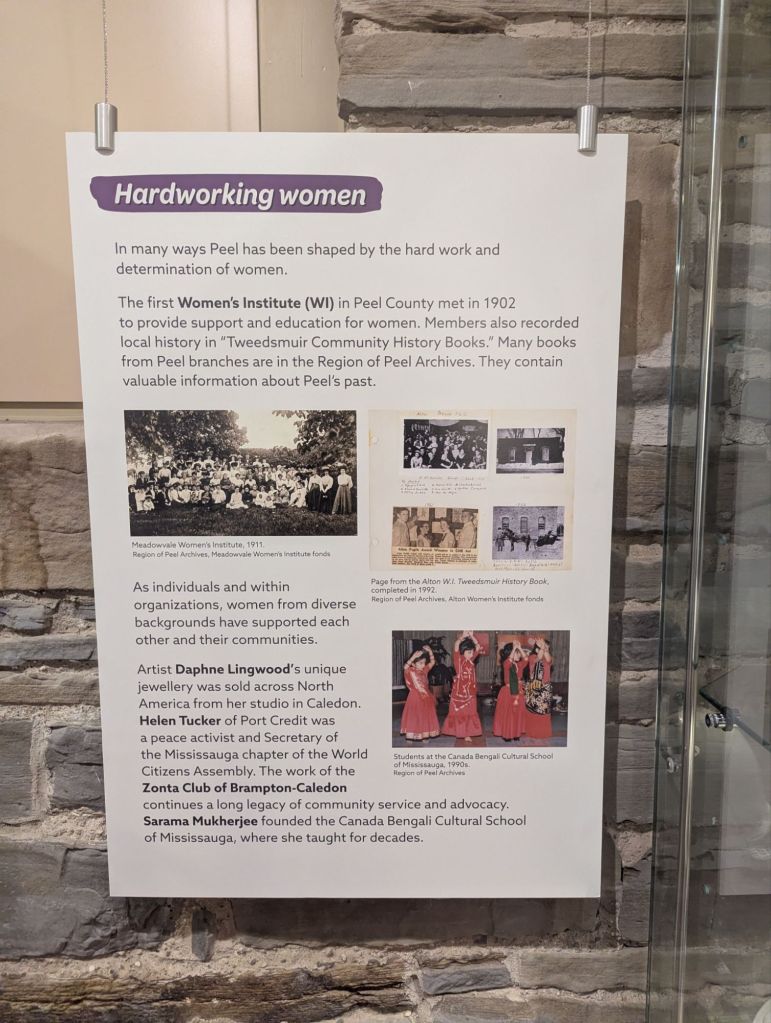
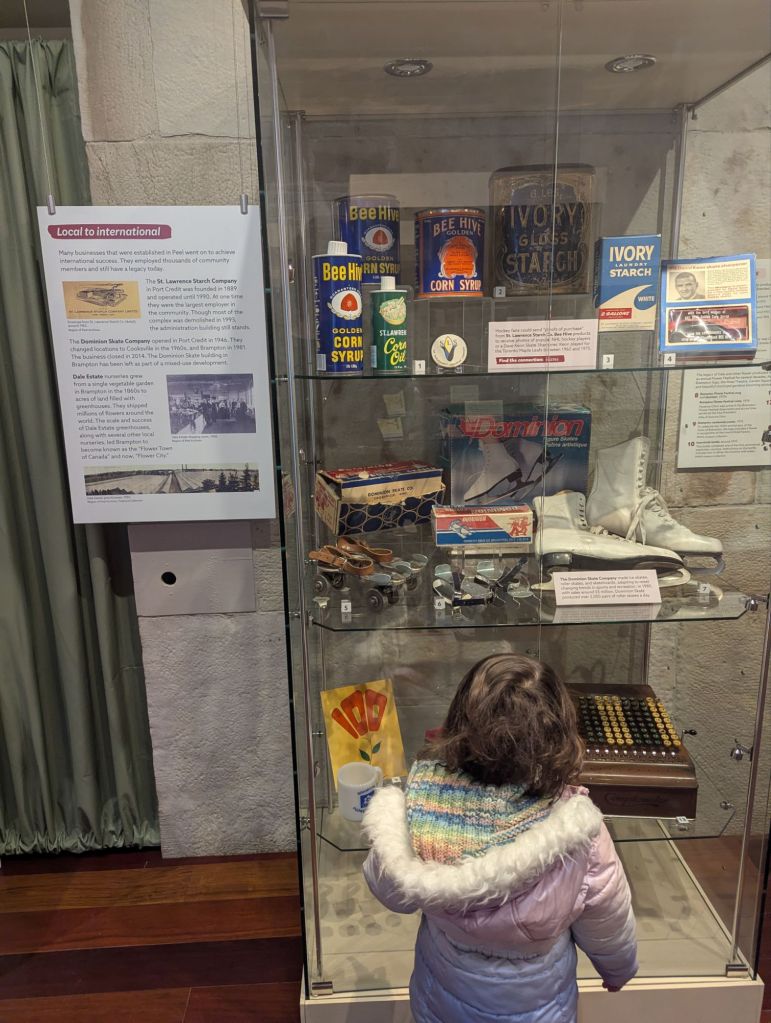
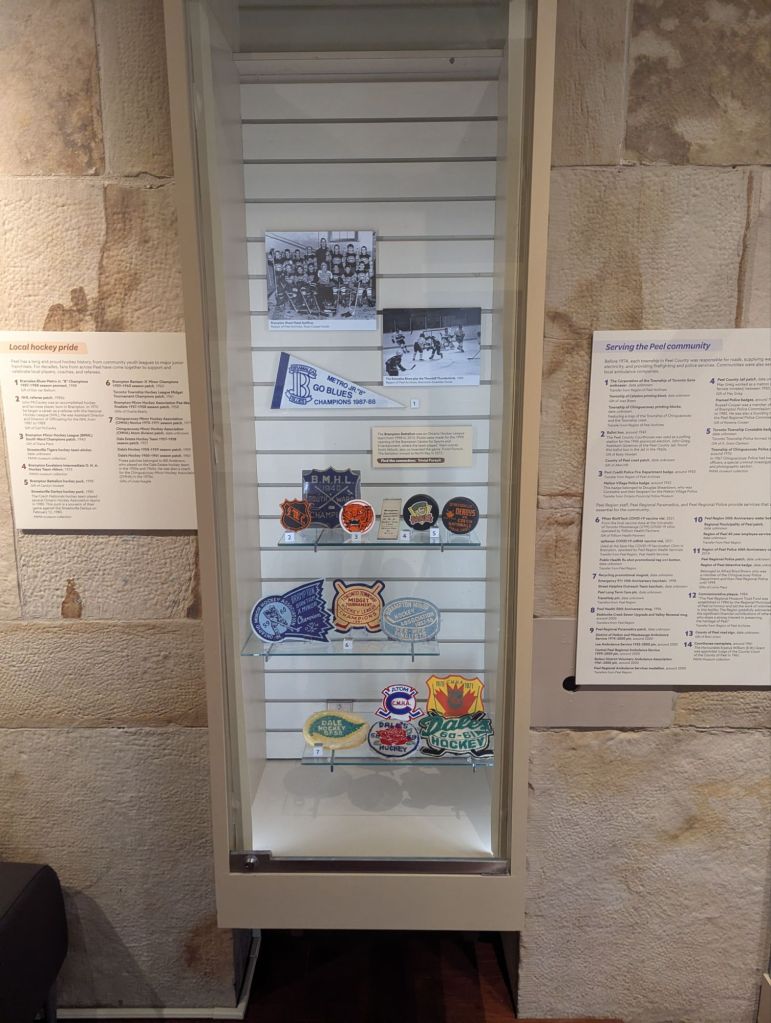
The exhibit provides information on the Museum’s history and, while not stated as such, addresses the question – why does this museum exist? It emphasizes the community’s role in establishing the museum’s collection and the ways the objects collected are connected to the community. They argue that through their collection, we learn and make connections, which helps build community.
Considering the context above, I wonder when they scheduled and planned the exhibit. To what extent did conversations about their value to the municipalities and region that began in 2023 inform the content?
Spotlight: Selections from the Museum Collection
March 14, 2026, to Spring 2027
The PAMA Museum collection includes thousands of objects with unique histories. This exhibition highlights a selection of items that have never or rarely been on display and what they can tell us about Peel’s past (2026d).
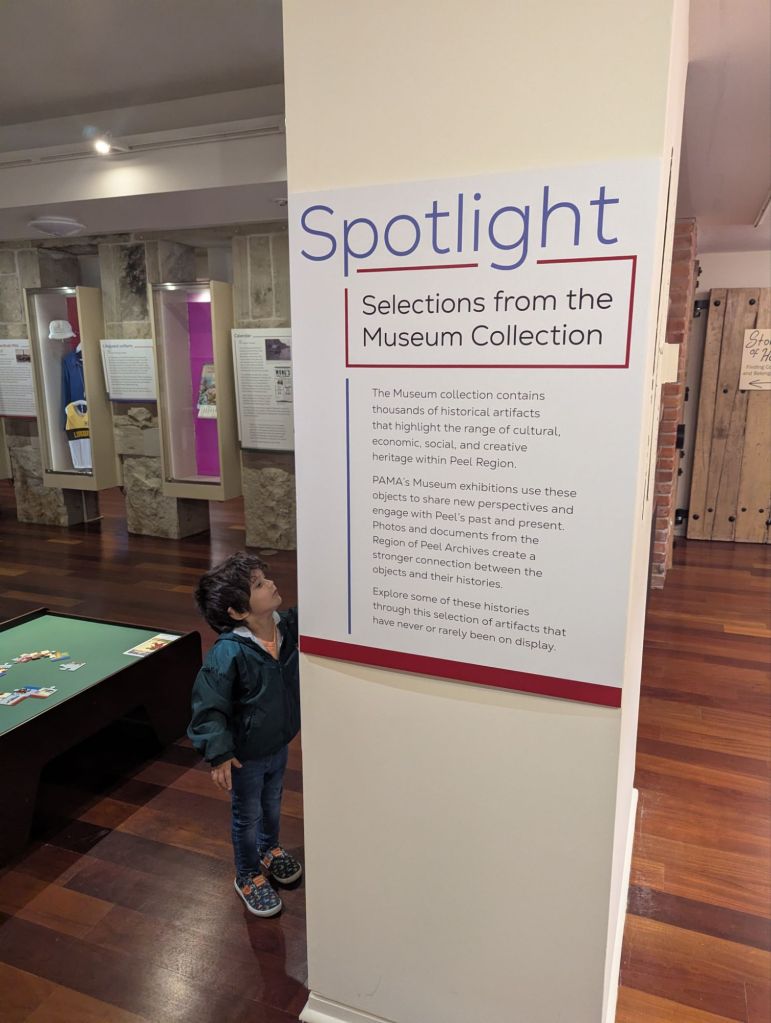

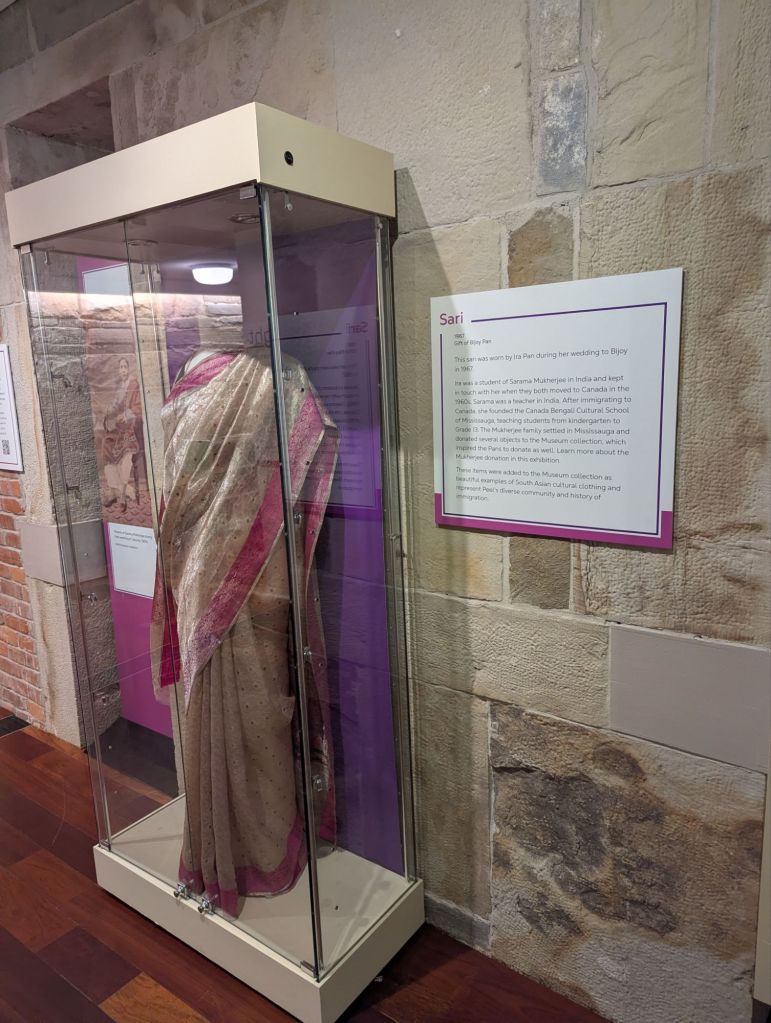
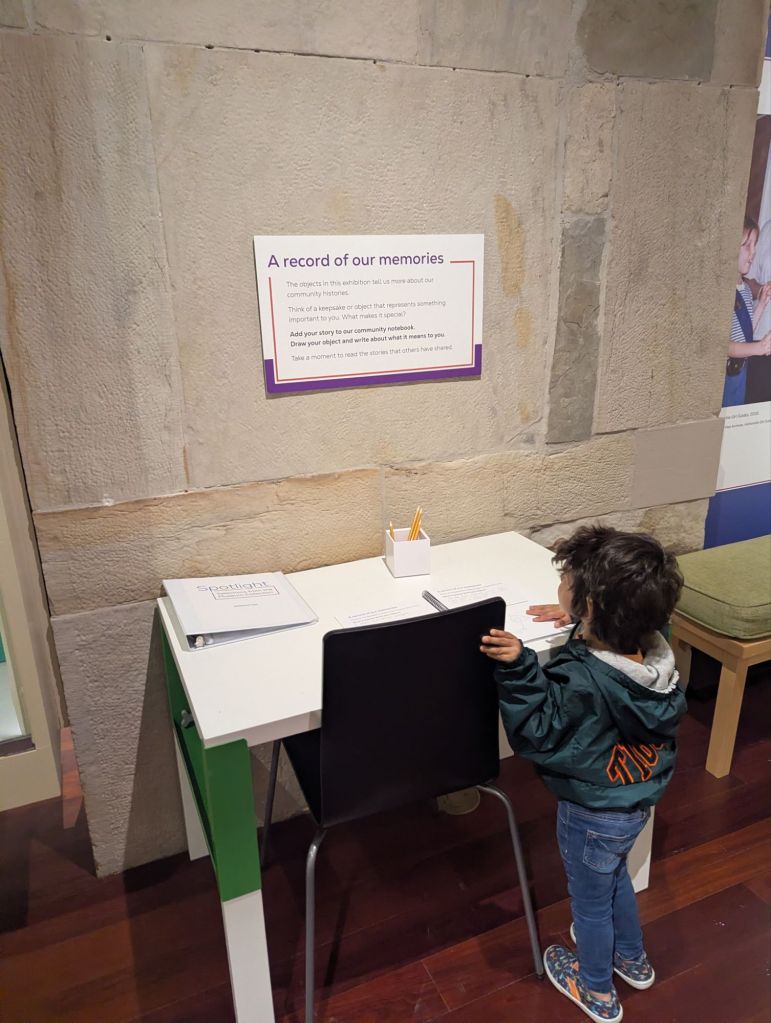
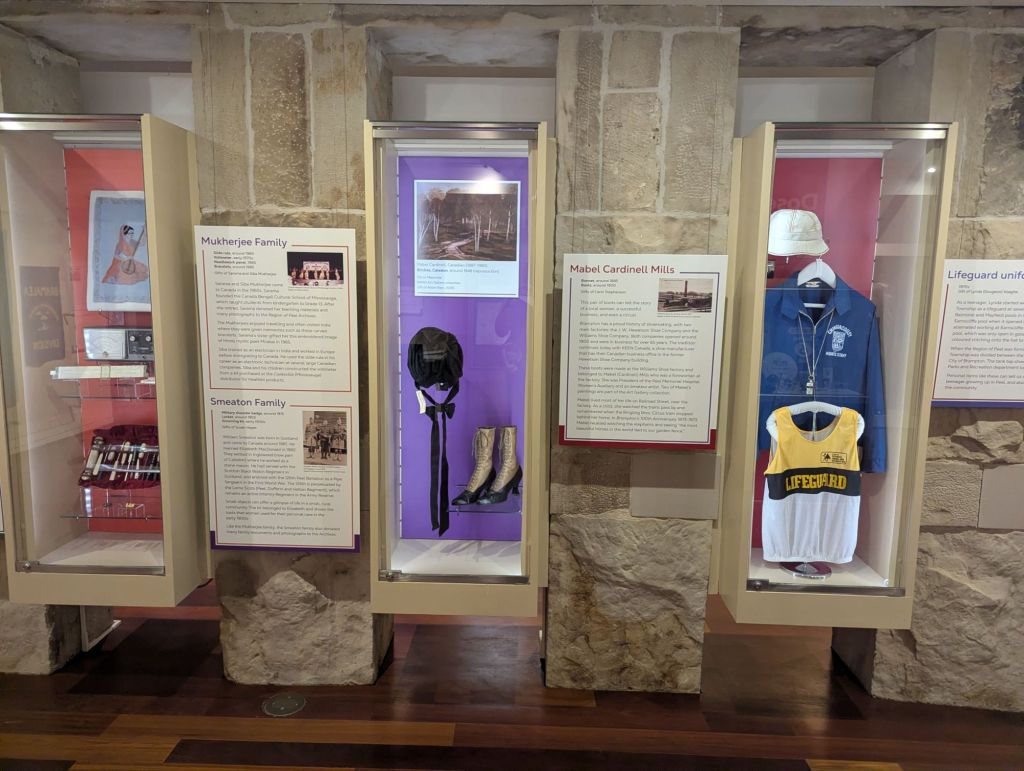
Spotlight is interesting because it reflects three principles that I have noticed underlining PAMA’s exhibitions:
They are engaged in decolonization work. My journey through the exhibit space started with a land acknowledgement that includes treaty information and a qr code for more information. Typically, community museums have one land acknowledgement as visitors enter the space, but the acknowledgement is not connected to the content within the space. PAMA is notable for making those connections in each space.
They are using collections to preserve diverse stories of home and connect to the community, reflecting the role of the museum articulated in the PAMA collects exhibit. The displays in Spotlight highlight a variety of individual artifacts that reflect diverse people. They also display different collections that reflect different families and communities. The items represent different kinds of artifacts in their collection as well as different stories that can be told through the collection.
They create inclusive spaces that work well for different people, including children and families. As noted above, the entrance to the exhibit includes a magnetic puzzle on the wall and another puzzle at toddler height under the caption “Pieces of history.”
There is space for visitor contributions. Most of the exhibits in PAMA contain space for visitor reflections. I am interested in learning more about how this exhibit may be acting as a site of research for future collections work. There is a station for people to reflect on objects that represent something important to them and why. If people engage with the reflection table, it will become an interesting artifact all on its own. To what extent this table is a deliberate research tool for the museum that could inform future collecting practices?
This is How we do it: Creating Museum
Unclear (There is no end date listed, but I believe it was originally a temporary exhibit as some information online has a November 2024 end date for the exhibit. It was also closed when I visited in January)
Come visit this interactive exhibition to learn what it takes to create museum exhibitions at PAMA. This engaging exhibition will guide visitors through the behind-the-scenes of exhibition development and will lift the curtain on a small part of museum work.
Curated by Claire Bennett with contributions by PAMA staff and illustrations by Sean L. Moore @sketchandsniffdesign (PAMA 2026e).
The exhibition walks visitors through the process of creating an exhibit. Starting with information on the different people involved in the process (in a larger / well resourced museum), it provides prompts that encourage visitors to think about how they would design an exhibition (e.g., What is the big idea? What are the facts?). The exhibit discusses the different things that need to be considered when designing an exhibition (e.g., conservation, color, layout, lighting).

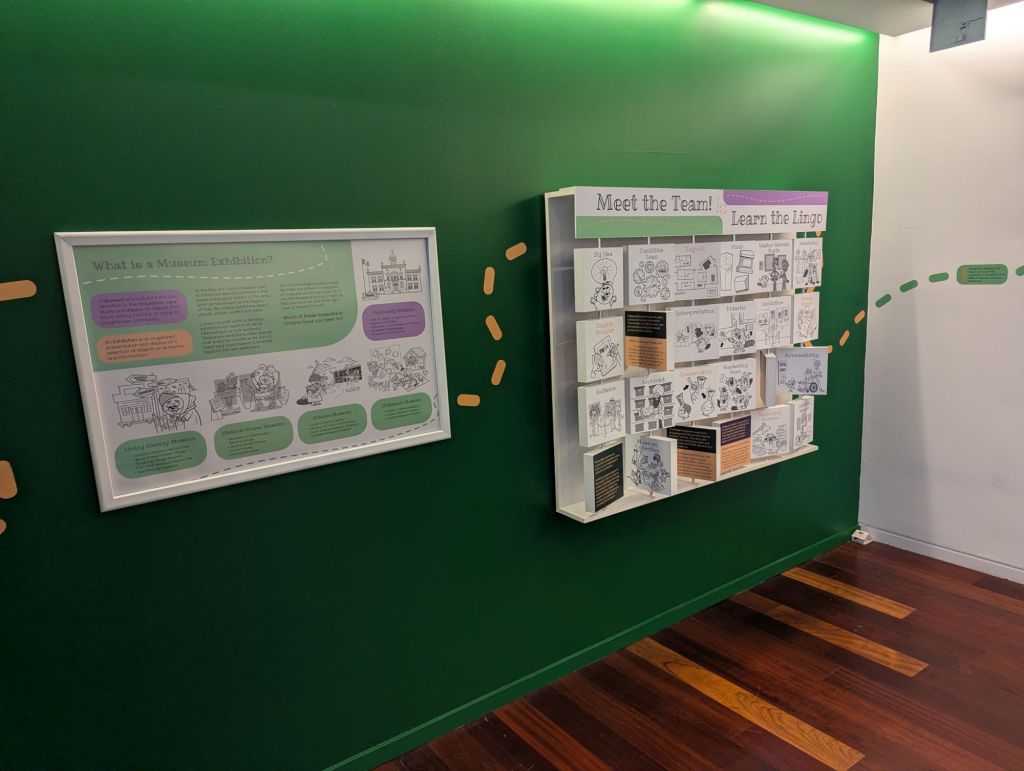
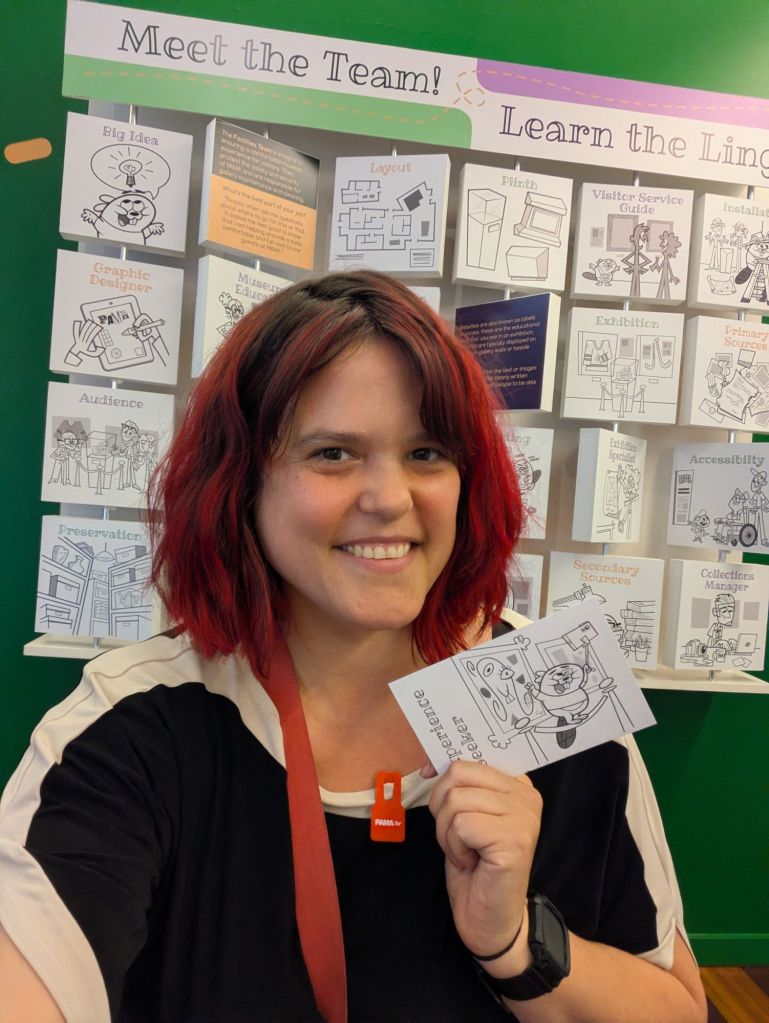


Aside from the content (I love a meta exhibit), here are some things that work really well:
The illustrations are amazing and an integral part of the exhibit. They are used to illuminate key ideas in an interesting way. At the entrance, there are cards with illustrations of different museum visitors on one side (e.g., experience seeker, explorer) and prompts on the other. Visitors (or at least those comfortable at a low table) are invited to colour the illustration and/or engage in a challenge specific to their visitor type. Illustrations throughout the exhibit also provide insight into the different roles in a museum and steps in the creation of an exhibit.
There are interactives in the centre of the room at a great height for children and stools for taller people to sit and engage. I was able to visit the exhibit and read all of the panels because my toddler was fully engrossed in the layout and visitor flow activity. They did not really understand what they were doing, but had fun laying out all of the pieces to make an image. They required very little input from me.
Each step in the process includes an interactive element to illustrate the core idea. Some of these were simple. For example, the panel on how to tell stories included a display with two potential labels and invited visitors to reflect on which was more effective. Other activities involve more active engagement. There are tools to learn about colour theory and a lux reader. There is also a booklet, which we did not do because my toddler is young and I wanted the chance to read panels, that encourages visitors to use the prompts and activities (e.g., a spinning wheel to choose the idea) to plan their own exhibit.
I would love to know how the general public has engaged with the exhibit and what prompted its development. It is such a good idea!!!! I hope to be able to return one day without a toddler in tow (or with sister who can help with the toddler) so that I can do the booklet.
Questions
Throughout the reflection, I asked some questions. So, some of these are repeats and some of these are new.
I have questions pertaining to the museum’s transfer:
- The documents that I read noted the Region would remove PAMA’s approximately $6 million budget from their tax levy in 2027. However, they also note the archives are excluded from the transfer. I am curious what the archives budget is and how their budget will be funded in 2027 (2028?). Has it already been removed from the figures that I am accessing?
- I am curious about the Museum’s name and whether that will change or not. Despite the single municipality gaining ownership, the collection still represents Peel Region.
- Will the transfer influence ongoing capital projects?
Considering the ongoing political context, I have questions related to the exhibits:
- How has the context shaped the exhibit schedules?
- To what extent did conversations about their value to the municipalities and region that began in 2023 inform exhibit content?
- What will future collecting practices look like with respect to Regional vs. more local municipal representation?
- The collection is being transferred to Brampton municipality intact. Are there plans to eventually transfer items in the collection to Missisauga?
As a visitor, some less niche questions are:
- Was the installation of “This is How we do it” extended? If so, why?
- Are there a lot of family visitors?
References
City of Brampton. 2026, April 24. “City of Brampton strengthening investment in arts and culture by assuming ownership and operations of Peel Art Gallery, Museum and Archives.” Accessed June 22, 2026. https://www.brampton.ca/EN/City-Hall/News/Pages/News-Release.aspx/1657
City of Mississauga. 2026, April 24. “Mississauga supports the transition of PAMA to Brampton.” Accessed June 19, 2026. https://www.mississauga.ca/city-of-mississauga-news/news/mississauga-supports-the-transition-of-pama-to-brampton/
Jordan, R. 1990, Oct 18. Peel museum keeps up to date with history: [WES edition]. Toronto Star Accessed June 22, 2026. https://www.proquest.com/newspapers/peel-museum-keeps-up-date-with-history/docview/436294074/se-2
Moreau, Nick. 2018. “Peel County Museum at Belfountain.” Accessed June 26, 2026. https://archive.org/details/peel-museum-at-belfountain-1963-1971/mode/1up
PAMA. 2023. Year in Review: Report to the Community. Accessed June 19, 2026. https://www.pama.peelregion.ca/sites/default/files/2024-05/PHC-0129-2023%20Year%20in%20Review-DIGITAL%20FINAL%20%281%29.pdf
PAMA. Accessed June 19, 2026a. Budget 2026: Heritage, Arts, and Culture. https://peelregion.ca/sites/default/files/2025-11/budget_2026_heritage_arts_and_culture_presentation.pdf
PAMA. Accessed June 24, 2026b. Stories of Home: Finding Community and Belonging in Peel. https://www.pama.peelregion.ca/exhibitions/stories-home-finding-community-and-belonging-peel
PAMA. Accessed June 25, 2026c. PAMA Collects: Connections Between Us. https://www.pama.peelregion.ca/exhibitions/upcoming-exhibitions/pama-collects-connections-between-us
PAMA. Accessed June 25, 2026d. Spotlight: Selections from the Museum Collection. https://www.pama.peelregion.ca/exhibitions/spotlight-additions-museum-collection
PAMA. Accessed June 25, 2026e. This is How We Do It: Creating Museum Exhibitions. https://www.pama.peelregion.ca/exhibitions/how-we-do-it-creating-museum-exhibitions
Peel Region. Accessed June 19, 2026. “Bakground: Peel’s Review.” https://peelregion.ca/transition/service-transfer-background
Valeri, Davinder. 2025. Implications of Transferring Peel Art Gallery Museum and Archives (PAMA) to the Local Municipalities as Directed by Peel Regional Council. Accessed June 19, 2026. https://pub-peelregion.escribemeetings.com/filestream.ashx?DocumentId=41538
Valeri, Davinder. 2026. Peel Art Gallery Museum and Archives (PAMA) Business and Transition Planning Framework. Accessed June 22, 2026. https://pub-peelregion.escribemeetings.com/filestream.ashx?DocumentId=45036

