by Robin Nelson
As part of my pre-interview reflections for the Dawson City Museum (DCM) Project, this post considers:
What actors – in particular, formal institutions, programs, and policies – support and regulate community museums in Yukon?
Importantly, like the post on ideas, this post represents a preliminary reflection – that is, a work in progress. Ideally, as I learn from people, the answer will evolve and expand with a better understanding of the most significant components.
I have organized my reflection into the following categories:
- Direct Financial
- Operational funding
- Project funding
- Employment
- Indirect Financial
- Building
- Other
- Direct Assistance
- Advisory and related services
- Training
- Indirect assistance
- Research
- Marketing
- Advocacy
- Regulatory activities
- Licenses
- Buildings
- Other
Direct Financial
Operational Funding
Operational funding is, arguably, the most important form of support for community museums. Without support that can be used flexibly for their basic activities, museums cannot function.
It is also a form of support that can be more difficult to get for a few reasons:
- Operational costs are ongoing expenses rather than a one-time investment.
- Operational funding sustains activities that are less attractive to funders (e.g., cleaning, administrative work, salaries, basic maintenance) instead of exciting new projects (e.g., an exhibition, program addressing funder goals).
- The costs of these activities increase over time due to things like inflation, capital projects, and increased professionalization.
Within what is now known as Canada, operational funding for community museum comes from local or provincial/territorial governments (in addition to earned revenues).
The territorial government seems to be the most significant funder of museum operations in Yukon. When discussing the rationale behind museum support, I outlined the development of this program (here).
Some Yukon municipalities provide operational funding (source). While the municipality is not currently an operational funder for the DCM, it provided funding in the past and I look forward to learning more about this relationship.
Project Funding
Project funding is, as the name suggests, funding for projects.
There are a range of programs that could be relevant from all levels of government and the nonprofit sector within different areas of activity (e.g, tourism, community development, culture).
Although there are some persistent programs that fund projects (e.g., the federal Museums Assistance Program has existed since the 70s), there are also regular changes in the grant programs available as funder objectives change or new issues emerge. Many project grant programs are actually designed to be short-lived with a set commitment (e.g., a certain amount of money over 3-5 years). As a result, I assume this section is very incomplete.
Federal
I do not have a record of federal project support for the DCM prior to the 70s, reflecting the lack of federal investment in community museums at that time. It is possible that I will find evidence of centennial related project funding from the late 1950s until the centennial in 1967.
The Museums Assistance Program (MAP) is the longest running federal support program for community museums. It started as part of the 1972 National Museum Policy.
The National Museums Corporation (NMC), which is now multiple crown corporations that govern one or more of the national museums, was originally responsible for the program. When the NMC disbanded, MAP became the Department of Communication’s responsibility before the Department of Canadian Heritage was created in the early 90s. The Department has continued to facilitate MAP and additional funding programs for culture, which may become significant.

Based on my existing research and conversations with the community partner for the project, here are additional areas of action and government actors that may become relevant:
- Funding areas:
- Tourism
- Multiculturalism
- Official languages
- Business development
- COVID Relief
- Agencies / Corporations
- Canada Council
- Parks Canada
- Canadian Conservation Institute
I am probably missing something. Do you know of a federal initiative or institution that should be on this list?
Federal – Territorial
The Yukon Legislative Assembly minutes suggest that federal-territorial partnerships are incredibly significant to museum support (and Yukon activities more broadly). For instance, the territorial program for conservation mentioned below was possible through federal funding. As a result, I will need to pay attention to the various federal – territorial agreements.
For the most part, I am unsure which will become significant. However, it is clear that the Tourism Industry Development Subsidiary Agreement is significant because the Canada-Yukon Tourism Agreement involved joint funding programs that the DCM accessed in the 1980s. In particular, there was funding for facilities improvements, including the DCM’s building.
Are there other agreements that you believe I should look into?
Territorial
Currently, the territorial government provides project funding through the Special Projects Capital Assistance Program. The Program combines several projects grants that targeted community museums and changed over time. There have been programs for large and small capital initiatives, artifact acquisitions, conservation, exhibits, collections management, and security.
As seen in the sections above, project grants that community museums access include more than the grants targeting museums explicitly or exclusively. In particular, there has been tourism and community development funding of relevance to the DCM. The Community Development Fund (CDF) seems to be particularly significant, providing the DCM funding for things like like capital improvements (Doiron 2001).

Other areas that may be significant include:
- non program dollars
- Lottery Commission grants
- Yukon Arts Council programs
Are there other territorial programs, areas of action, or agencies that I may be missing?
Local and More
There are project grants available from Dawson City, the local government. I look forward to learning more about this local level relationship as I do not know anything yet!
Other non-governmental actors include:
- Museum associations
- Private organizations or foundations
I have a list of what I think are grants that have come up, but I do not know anything about them:
- Access to the Arts (1976)
- Historical Resources Program
- Business Development
What non-governmental actors providing project funding or local support programs do you think I will need to consider?
Employment
As stated above, operational funding is one of the most helpful sources of support for museums because it enables them to fund basic operations and develop capacity. Operational funding allows community museums to hire an Executive Director and other full-time staff (e.g., a curator position at the DCM). However, one person working alone (or two or three) have limited capacity to animate a site or do even the most basic museum functions.
Due to community museums’ limited human resource capacity, I have argued elsewhere (Nelson 2019) that student employment programs are the foundation on which community museum policies are built. Since the 1970s, many (most?) community museums have an increase in employees during the summer due to employment programs.
While summer student employment programs are the most prominent within my past research, there are others of relevance. Here is a list of employment programs that have been mentioned within the research I have done thus far:
- Canada Community Services Projects (1980s): A federal program that supported employment projects to add value to the community and help those at a competitive disadvantage in the job market.
- Canada Works / Section 38 (1970s – 1990s): A federal program that created jobs for unemployed people.
- Canada/Yukon Job Development Program (mid 1980s): A joint funding program that aimed to provide work experience and training (possibly to those at a disadvantage in the job market)
- Local Employment Opportunities Program (1980s – c. 1998): A federally funded and territorially administered program that provided funding for projects of value to the community with extensive use of local materials and employment. The program was used extensively in Dawson City (source)
- Local Initiatives Program (1971-1977): A federal program that aimed to create jobs through grants to areas with high unemployment.
- New Horizons: A federal program for older adults that exists today.
- Special Employment Assistance Program (1980s): I believe the program was territorial, but am uncertain. It provided funding for student employment (source)
- Summer Canada (1983-1985): The program aimed to provide students with meaningful experiences that also benefited their community.
- Summer Employment Challenge (insert year) program (1980s): A joint federal – provincial / territorial program that provided for student jobs.
- Summer Job Core Grants (1978): I do not know what this is.
- Winter Works: There have been both federal and territorial initiatives called “winter works.” The title shows up in the DCM archive file listing in the 1980s and is an area for future research.
- Young Canada Works (1977 – ): The federal government facilitated a YCW program from 1977-1980. At some point (I am looking for the year), the Canadian Museums Association began facilitating a similar program with the same name, but for heritage, that continues today and is one of the most significant employment programs for community museums across what is now known as Canada.
If you’re interested in learning about job programs more broadly, this article is a great source: Roy and Wong 2000
Employment programs as community museum policy is one of my broader research interests. If you have thoughts and suggestions on what I should look at, I would love to hear them!
Indirect Financial
At times, support is evident when considering the money a museum does not have to pay rather than money it receives. Within cultural policy, tax relief is a common example of an indirect form of financial support. However, there are actions to consider.
Building
In the other jurisdictions that I have studied (ON and NB), the free use of space is a significant municipal contribution to community museums. Municipalities will allow museums to use a space (usually a building of historic significance) for free or a nominal fee. The agreement may also include free maintenance and/or utilities. The use of a municipal space also means the museum does not have to pay property tax, which can be a significant burden at some institutions.

Interestingly, in the DCM case, the territorial government has provided the building and maintenance. After their first location burnt down, the DCM opened in the Old Territorial Administration Building in 1962. The historic site and its use seem to be a significant factor in the museum’s relationship with the territory.
I am interested to see whether (or I expect how) the building is discussed during interviews.
Other
I am unsure what other forms of indirect financial support are significant to the DCM. For example, their records include files on the Power Rate Relief Program, and I don’t know what that is.
Do you have any ideas about indirect financial support that I should be considering?
Direct Assistance
Community museum policies at the national and subnational levels tend to focus on quality and standardization in the sector, which leads to initiatives providing assistance or advice rather than (ideally in addition to) money.
Advisory and Related Services
Federal
Parks Canada (and the historical equivalent) has a significant presence in Dawson City, starting on a limited scale in the 50s and then expanding in the 60s/70s. As a result, there are personal and professional relationships between experts working for Parks Canada and DCM employees. A report from 1980 argues the DCM’s relationship to Parks Canada contributed significantly to its development:
Clearly, the museum has benefited from this arrangement, to the point where its programs are the most advanced and effective of any Yukon museum.
Johnson 1980
I look forward to learning more about this relationship and, exactly, how it influenced the DCM’s development. Information about Yukon’s conservation program suggests the relationship may have focused, at some point, on collections management and conservation. However, I imagine the relationship has evolved over time as employees change or the federal government launches new initiatives.
The Canadian Conservation Institute (CCI) is another federal actor that historically provided free conservation and advisory services to community museums across what is now known as Canada. Considering the historical proximity of Parks Canada’s conservators to the DCM, I am unsure what (if any) significance the CCI has had on the museum’s collections.
There are other federal agencies and departments that may become relevant (e.g., Canada Council, Department of Northern Affairs) in terms of advice or services. However, I am most interested in trying to learn about the “young cataloguer from the National Museum in Ottawa” who spent a week in Dawson in 1962 and:
scrubbed old shoes, carpenter tools, rusty lamps, and dirty pots.
Warner 1963, 14
He also introduced the museum volunteers to:
the intricacies of cataloguing every item in the place.
Warner 1963, 14
I have never heard of a federal assistance program prior to the development of the National Museums Corporation and am so intrigued. If you can shed any light on who this person was, why they were there, and whether it was part of a larger program, please contact me!
Territorial
Yukon hired its first museums advisor in 1984 and, thanks to federal funding, it then also hired a conservator who provided related services. I do not know what the DCM’s relationship to these people has been or how Yukon’s conservation / advisory program developed. It will be fun to learn more!
Other
The DCM has historically had relationships with museum associations (e.g., YHMA, CMA, BCMA), which I will discuss under training. The DCM also has an archive and, as such, has presumably had a relationship to archival nonprofit organizations. These associations provide kinds of advisory services.
In particular, I am currently reading through the Yukon Historical and Museums Association (YHMA) newsletter and have previously read various Canadian Museums Association (CMA) content. I will do a post at some point about the role of newsletters for these museum associations prior to the development of the internet. They are interesting and were important sources of advice for museums.
Do you know any other non-governmental actors providing advice or assistance that I should be considering?
Training
The Canadian Museums Association (CMA) developed training programs in the 60s but then regulated the responsibility to provincial / territorial associations, like the YHMA. As early as 1977, DCM employees went to BC Museum Association events for training. Other relevant training sources may include:
- The territorial museum advisor and conservator
- Parks Canada
- The Canadian Conservation Institute
- Heritage Yukon
Tangentially, there are also actors funding training, such as the CMA, Yukon Heritage Training Fund, the NMC, and (likely) more.
Are there any other low or no cost training programs that you believe will be relevant? How about funders for the training that I have missed?
Indirect Assistance
Indirect assistance refers to services that benefit community museums as a collective without targeting an individual museum.
Research
A significant take away from my PhD interviews was the importance of data for community museums as a collective and individually. It is important to have research supported arguments when advocating or planning.
There are various federal-level reports and initiatives that may become relevant, but these are too numerous to name before I have talked to people in order to narrow it down. The Nielsen Task Force, for example, involved a review of federal programs. It discussed the objects within national collections, which were displaced from Yukon and argued they should be returned. Their Report influenced the development of territorial support for community museums (source).
On a more local scale, the Yukon Territorial Government is a significant funder of research relating to Yukon community museums. They have hired consultants to conduct research and write reports when considering changes to their own programs in the 1980s, 2000s, and 2010s. They have also funded research commissioned by the YHMA, such as a report on the economic impact of museums (source).
Do you have an example of research that is or was significant to Yukon community museums, which I should considered?
Marketing
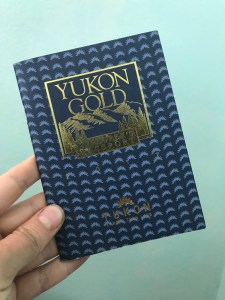
Within some jurisdictions, marketing support for community museums is a significant means of helping them generate increased earned revenue.
Within Yukon, the government began the Yukon Gold Explorers Passport program in 1992, giving visitors a chance to win a piece of Klondike gold after getting stamps at different museums, First Nation Cultural Centers, and visitor centers. The program is seen as beneficial to museums:
The program was particularly beneficial to museums, which generally reported a significant increase in visitation.
Source
Relatedly, highway sign policies were significant in my research on Ontario. The Yukon legislative assembly minutes suggest they may also be important to Yukon community museums.
Broader tourism policies and initiatives at all levels of government is another marketing related area that I will pay attention to.
Do you think I am missing something in terms of significant marketed support for community museums in Yukon?
Advocacy
Interestingly, the MacBride Museum is discussed a fair bit in the legislative assembly minutes, which mention individual advocacy efforts. However, in other research projects, I have found collective advocacy initiatives through a museum association more significant to the development of subnational community museum policies. In Yukon, the Yukon Historical and Museums Association (YHMA) is mentioned in legislative assembly minutes discussing consultations and decision making. I am excited to learn more about their role.
If you are interested in learning more about the role of associations, I have published two pieces related to Ontario’s associations: Nelson 2021a and Nelson 2021b.
How significant are associations to advocacy in your opinion? Are there advocacy related actors I should consider in addition to the museum itself and the YHMA?
Regulatory
Licenses
As part of their fundraising practices the DCM has had to get lottery licenses. So, I expect regulations around these licenses will become significant.
Are there other licenses of significance to Yukon community museums?
Building
The DCM is in a historic building. In my past research, I have been told about the challenges of following things like fire code and accessibility legislation in a historic site. Within the Yukon legislative assembly minutes there is some discussion around the challenges of installing a sprinkler system in a way that is sympathetic to the historic site’s original design at the DCM (Source). So, I think fire code legislation will become significant, but I do not believe Yukon has accessibility legislation.
Are there other building related regulations that you believe I will have to pay attention to?
Other
Yukon does not have museum standards attached to funding (that I am aware of). However, Cole & Associates (2014) mention a standards committee being formed in 2013. I am curious about the development of museum standards (or lack thereof) in Yukon.
Since the DCM is a nonprofit organization and registered charity, I expect there is related legislation (e.g., the Societies Act) of relevance. The Museum also has paid staff, meaning there is employment legislation of relevance. I look forward to learning what people connected to the DCM believe I should be considering.
How about you? Are there additional regulatory activities that you think will become important?
Questions
I do not have a specific question to end the post on because I have placed questions throughout.
As I start interviews, the outline I have developed will evolve. I hope that posting about it will help that evolution and strengthen my consideration. If you have ideas, let me know! I look forward to learning from you.
Bibliography
Most sources used include an embedded link. The following sources do not have a public digital copy.
Catherine C. Cole & Associates. 2014, June. Funding Allocation for Yukon Museums and First Nation Cultural / Heritage Centres Options Paper. Cultural Service Branch, Department of Tourism and Culture, Yukon Government.
Warner, I. (1963). “A Museum for Dawson City.” North 10(4): 13-16.


 Museoception